What Is a Virtual Phone Number? How It Works, What It Costs and How to Get One
A plain-English guide to virtual phone numbers: what they are, how calls reach you, the four number types, what they really cost and how to set one up in any country.
Quick answer
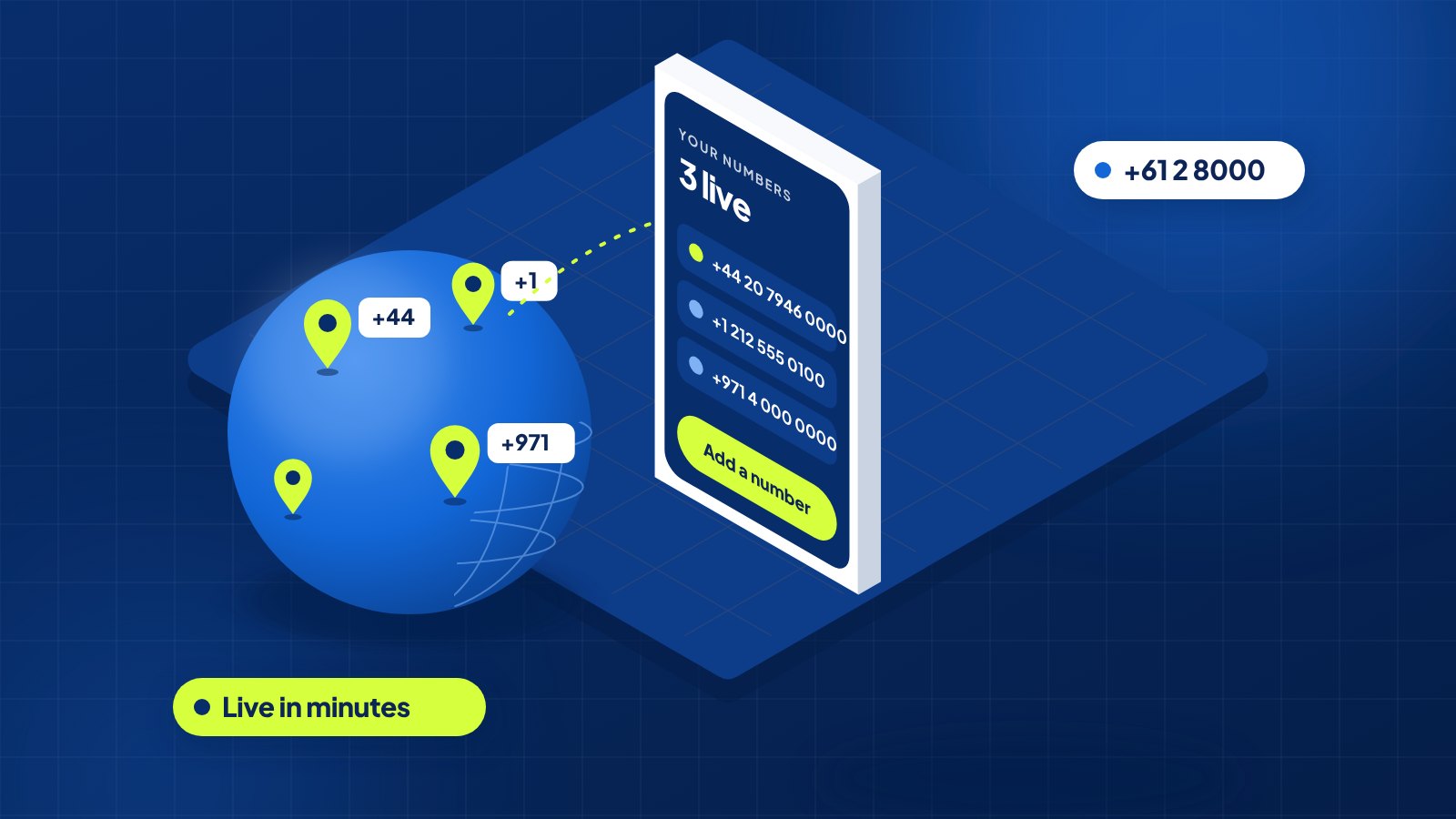
A virtual phone number is a real phone number that is not tied to a SIM card, a phone line or a place. Calls and texts to it travel over the internet and are sent wherever you choose: your mobile, a web browser, a desk phone or an AI receptionist. You can get one in most countries in minutes, without living there.
Key takeaways
- A virtual number looks and dials like any other number, but it lives in the cloud instead of on a SIM or a copper line.
- You choose where calls ring: one phone, several at once, a browser, a phone menu or an AI receptionist.
- There are four main types: local, mobile, national and toll-free. Most small businesses start with a local number.
- Typical cost is a small monthly fee per number plus per-minute call charges. Callmacy numbers start at $3.99 a month.
- Some countries ask for ID or proof of address before a number goes live. That is a legal rule, not a provider choice.
- You can usually move (port) a number you already own to a virtual provider and keep it.
In this guide
- What is a virtual phone number?
- How does a virtual phone number work?
- Virtual number vs landline vs mobile SIM
- The four types of virtual number
- What can you do with a virtual number?
- How much does a virtual phone number cost?
- How to get a virtual phone number in five steps
- Why do some countries ask for documents?
- Can you keep your existing number?
- Limits and things to check before you buy
- Who uses virtual phone numbers?
- Is a virtual phone number right for you?
- Frequently asked questions
You want a phone number in London, Dubai or New York, but you do not have an office there. Or you are tired of giving customers your personal mobile. Or your team works from four cities and one landline on one desk no longer makes sense.
A virtual phone number solves all three. This guide explains what it is, how a call actually reaches you, which type to pick, what it costs and how to get one today. No telecom background needed.
What is a virtual phone number?
A virtual phone number is a normal telephone number that is not attached to a physical line or SIM card. It exists in a provider's cloud platform. When someone dials it, the call is carried over the internet and delivered to whatever device or destination you have chosen.
To the person calling, nothing is different. They dial a local number, it rings, you answer. They cannot tell whether you are in the same street or on another continent.
You may see the same thing called a VoIP number, a DID number (direct inward dialling), a cloud number or an online number. For everyday purposes they mean the same thing. One useful distinction: VoIP is the technology that carries the call over the internet, while the virtual number is the address people dial.
60+
Countries
where Callmacy sells numbers
$3.99
Per month
starting price for a number
Minutes
To go live
once any documents are approved
How does a virtual phone number work?
A traditional number is wired to one place: a socket in the wall or a SIM in one phone. A virtual number is a routing rule. It says "when this number is dialled, do this".
-
A customer dials your number
They call it like any local number, from a mobile or a landline.
-
The call reaches the phone network
The caller's carrier hands the call to the carrier that hosts your number.
-
It is converted to internet traffic
Your provider turns the call into data and looks up your routing rules.
-
Your rules decide where it goes
Ring your mobile, ring three people at once, play a menu, or let an AI receptionist answer.
-
You answer on any device
A mobile, a browser tab, a desk phone or your own phone system. The caller hears a normal call.
Because the routing lives in software, you can change it in seconds. Going on holiday? Point the number at a colleague. Closed for the evening? Send calls to voicemail or an AI receptionist. Opening a second office? Add another number and route it to the same team.
Outgoing calls work the same way in reverse. You call from a web phone or an app, and the person you ring sees your virtual number as the caller ID, not your personal mobile.
Virtual number vs landline vs mobile SIM
| Feature | Landline or SIM | Virtual number |
|---|---|---|
| Tied to | One socket or one handset | Nothing. Works on any device with internet |
| Where you can get one | Only where you live or have an address | Most countries, from anywhere |
| Set-up time | Days for a line, a shop visit for a SIM | Minutes online |
| Who can answer | Whoever holds the phone | One person, a whole team or an AI |
| Moving office | Number may not move with you | Number follows you |
| Extra features | Usually sold separately | Menus, recording, voicemail to email included or low cost |
| Needs internet | No | Yes, for the device that answers |
The one real trade-off is in the last row. A virtual number depends on an internet connection somewhere in the chain. If you forward calls to a normal mobile, the final leg uses the mobile network, so your own Wi-Fi does not matter. If you answer in a browser, you need a stable connection. More on that under limits to know about.
The four types of virtual number
Most providers sell four kinds. They differ in what the caller sees, what the caller pays and which features work.
| Type | What it looks like | Best for | Good to know |
|---|---|---|---|
| Local | A city or area code, such as 020 for London or 212 for New York | Looking established in a specific city | Cheapest type in most countries |
| Mobile | A mobile-range number | Texting customers, WhatsApp, a "personal" feel | Often the only type that can send and receive SMS |
| National | A non-geographic number for the whole country | Businesses that serve a country, not a city | Not available everywhere |
| Toll-free | 0800, 1-800 and similar | Sales lines and support lines | Free for the caller; you pay for incoming minutes |
Interactive
Which number type fits you?
Get a local number
Customers trust a familiar area code, and a local number is usually the cheapest type. You can add more cities later, each ringing the same team.
Search local numbersGet a mobile number
In most countries only mobile-range numbers can send and receive SMS reliably. Check the SMS label on the number before you buy.
Search mobile numbersGet a national or toll-free number
A national number does not tie you to one city. A toll-free number removes the cost of calling you, which helps sales and support lines.
Search toll-free numbersKeep it and port it
You do not need a new number to go virtual. You can transfer the one your customers already know and add features to it.
How porting worksWhat can you do with a virtual number?
The number is the start. The value is in what happens after someone dials it. With a provider such as Callmacy, a single number can do all of this:
- Call forwarding. Ring your mobile, a landline or several phones at once. See how forwarding works.
- Web phone. Make and take calls in a browser tab, with your business number as caller ID.
- Phone menu (IVR). "Press 1 for sales, 2 for support."
- Ring groups and queues. Share one number across a team so the first free person answers.
- Voicemail to email. Messages arrive as audio in your inbox.
- Call recording and transcripts. Useful for training and for remembering what was agreed.
- SMS and WhatsApp. Text from your business number on numbers that support it.
- AI receptionist. An AI answers when you cannot, takes a message and emails you a summary. Read the AI receptionist guide.
- SIP trunking. Connect the number to a phone system you already own. About SIP trunking.
How much does a virtual phone number cost?
Pricing has three parts. Understanding them stops surprises on your first bill.
- A monthly fee per number. This is the rent for the number itself. It varies by country and type because local carriers charge providers different wholesale rates. At Callmacy, numbers start at $3.99 a month.
- Per-minute call charges. You pay for incoming minutes on some number types (always on toll-free), and for the outgoing leg when a call is forwarded to a phone. Calls answered in a browser avoid the forwarding leg.
- Optional extras. A one-off set-up fee in a few countries, SMS per message, AI receptionist minutes, or a plan that bundles features.
There is usually no hardware to buy and no contract. With a prepaid wallet you top up, the monthly fee and calls come out of the balance, and you can cancel a number whenever you like.
If you are replacing traditional phone lines, the saving is usually in the line rental. Try your own numbers:
Calculator
Old phone lines vs cloud numbers
Line rental only; calls are extra on both. Cloud number price starts at $3.99 a month and depends on the country.
Old lines, per year
—
Saved per year
—
How to get a virtual phone number in five steps
-
Choose the country and type
Pick where you want to appear local, then local, mobile, national or toll-free.
-
Pick the number
Search by city or area code and choose a number you like from the list.
-
Upload documents if asked
Some countries require ID or proof of address. Approval is usually quick.
-
Decide where calls go
Forward to your mobile, answer in the browser, build a menu or switch on an AI receptionist.
-
Make a test call
Ring the number from another phone, check the caller ID on an outgoing call, and you are live.
You do not need to live in the country, and you do not need a local company for most number types. The main exception is covered next.
Why do some countries ask for documents?
Telecom regulators in many countries require proof of who is using a number. It reduces fraud and nuisance calls. The rules belong to the country, so every legitimate provider has to follow them.
What you may be asked for:
- Photo ID of the person or a director of the business.
- Proof of address, sometimes in the same country or even the same city as the number.
- Company registration for business numbers.
Many countries need nothing at all for local numbers. Others are strict about mobile or national ranges. Check before you plan a launch around a specific number. Callmacy shows what each country needs on the document requirements page, and the verification guide explains how to upload.
Can you keep your existing number?
Yes, in most cases. Moving a number from one provider to another is called porting. Your number stays the same; only the company behind it changes.
The usual process:
- Check that your number can be ported to the new provider.
- Send a recent bill and the account details from your current provider.
- Sign a letter of authorisation.
- Keep the old service running until the transfer completes. A cancelled number usually cannot be ported.
Porting takes from a few days to a few weeks depending on the country and the losing carrier. At Callmacy the transfer itself is free. The number porting guide walks through each step.
Limits and things to check before you buy
Virtual numbers are flexible, but they are not magic. Check these five points first.
- Verification codes. Some banks, social networks and apps refuse to send one-time passcodes to virtual numbers, or accept only mobile-range ones. If receiving codes is your main reason, test the exact service before relying on it.
- SMS support. Not every number can text. Capability depends on the country and number type, and business texting to the United States and Canada needs registration with the carriers first.
- Emergency calls. Calling emergency services from an internet phone does not always pass your location the way a landline does. Keep a mobile to hand and do not treat a virtual number as your only route to emergency help.
- Internet quality. Browser and app calls need a steady connection. A wired or strong Wi-Fi connection matters more than raw speed. Forwarding to a mobile avoids the issue.
- Outbound caller ID rules. Some countries restrict which numbers you may show when calling out. A reputable provider will only let you display numbers you actually hold.
Who uses virtual phone numbers?
- Small businesses that want a professional line without giving out a personal mobile.
- Exporters and online shops that want a local number in each market so customers are not asked to dial abroad.
- Remote and hybrid teams who need one number that rings people in different cities.
- Freelancers and consultants separating work calls from private life on one handset.
- Agencies and call centres that connect numbers to their own phone system with SIP.
- Start-ups testing a new country before committing to an office there.
Two related reads: if your team travels, a travel eSIM keeps the web phone online abroad, and if you still have UK phone lines, check what the PSTN switch-off in January 2027 means for you.
Is a virtual phone number right for you?
If you need a number in a place you are not, want calls to reach more than one person, or want features such as menus, recording and AI answering without buying hardware, a virtual number is almost certainly the simplest route. If all you need is one personal line in the town you live in, your mobile already does the job.
For most businesses the practical first step is small: one local number, forwarded to the phone you already carry. You can add countries, team members and automation when you need them.
Frequently asked questions
What is a virtual phone number in simple terms?
It is a real phone number that is not tied to a SIM card or a landline. Calls to it travel over the internet and ring wherever you choose, such as your mobile, a web browser or a team of people.
Is a virtual phone number the same as a VoIP number?
In everyday use, yes. VoIP is the technology that carries calls over the internet, and a virtual number is the number people dial. Most virtual numbers use VoIP behind the scenes.
How much does a virtual phone number cost?
You normally pay a monthly fee for the number plus per-minute charges for calls. The fee depends on the country and number type. Callmacy numbers start at $3.99 a month, with no contract.
Can I get a phone number in a country I do not live in?
Yes. That is the main use of a virtual number. For many countries you need nothing more than an account. Some countries require ID or proof of address before the number is activated.
Can I receive verification codes on a virtual number?
Sometimes. Many services accept virtual numbers, but some banks and apps block them or accept only mobile-range numbers. Test the specific service first if codes are your main need.
Can I keep my current number and make it virtual?
Usually yes. You can transfer (port) an existing landline or mobile number to a virtual provider and keep the same digits. Keep your old service active until the transfer finishes.
Do I need special equipment?
No. You can forward calls to the phone you already have or answer in a web browser. Desk phones and phone systems are optional and connect over SIP.
Is a virtual phone number legal and safe?
Yes. Virtual numbers are issued by licensed carriers and regulated like other numbers. Use a paid number from a reputable provider, because free shared numbers are public and frequently blocked.